

On this page
This guide shows how to increase FPS in CS2 and how to fix FPS drops, step by step. You will learn how to turn on the FPS counter, which video settings cost the most frames, what to set in a table you can copy, which launch options still do something in 2026, and what to change in Windows and in your NVIDIA or AMD driver. Every setting name below is written as it appears in the English CS2 menu, and every command was checked against Valve release notes, the Steam store page and hardware media on November 1, 2026.
Low FPS in CS2 almost always comes from settings that are too heavy for the PC, from a background program that takes resources, or from an old driver. Network lag looks similar but has other causes, and we explain how to tell them apart. When the game runs well, skins look better in the inspect too, and you can trade for new ones on SkinsMonkey.
Quick Fixes for Low FPS in CS2, in the Order We Would Try Them
If you want the short answer first, these steps give the most frames for the least work. Start at the top and check the FPS counter after each change.
- Turn on the FPS counter in Settings, Game, Telemetry, so you can measure every change.
- Lower Multisampling Anti-Aliasing Mode, Shader Detail, Particle Detail and Ambient Occlusion.
- Set Display Mode to Fullscreen and Refresh Rate to the highest value your monitor supports.
- Update the GPU driver through the NVIDIA App or AMD Software: Adrenalin Edition.
- Close the browser, recording software and overlays you do not use while you play.
- Remove old launch options from CS:GO guides and keep only the ones you need.
- Lower the resolution or turn on FidelityFX Super Resolution if the GPU is still the limit.
- Compare your PC with the minimum requirements on Steam before you change anything else.
On most PCs the first three steps make the biggest difference. Driver and Windows changes help less often, but they fix the cases where the FPS is fine on paper and the game still stutters.
Why CS2 Has Low FPS and FPS Drops
Counter-Strike 2 runs on the Source 2 engine and needs a stronger PC than CS:GO did. Lighting, shadows and effects are more detailed, and many settings that were cheap in CS:GO now cost a lot of frames. A PC that ran CS:GO at high FPS on low settings can struggle in CS2 on the same settings.
The minimum requirements on the Steam store page are Windows 10, a CPU with 4 hardware threads (Intel Core i5 750 or higher), 8 GB of RAM, a video card with 1 GB or more that supports DirectX 11 and Shader Model 5.0, and 85 GB of free space. A PC at this level starts the game, but it will not hold high FPS in a full match. Our CS2 system requirements post explains what each part does for the frame rate.
FPS drops that come and go have other causes. A program in the background can take CPU time for a few seconds, a laptop can switch to its weak integrated GPU, and a hot CPU or GPU lowers its clock speed under load. If the picture is smooth but players teleport and your shots do not hit, the problem is the connection or the server, not the FPS. Turn on the ping and packet loss lines in Telemetry, described below, to see which one it is.
How to Show FPS in CS2: Telemetry or cl_showfps
Measure before you change anything. CS2 has a built-in counter: open Settings, go to the Game tab, scroll to Telemetry and set Show Frame Time And FPS to Always. The counter appears in the top right corner of the screen together with the frame time. In the same section you can also turn on Show Ping and Show Packet Loss/Misdelivery.
The same setting has a console command. First set Enable Developer Console (~) to Yes in the Game tab, open the console with the ~ key and type one of these:
- cl_hud_telemetry_frametime_show 2 shows frame time and FPS all the time. The value 1 shows it only when performance is poor, and 0 hides it.
- cl_showfps 1 shows a simple FPS counter. cl_showfps 0 turns it off.
Test on a real map with other players, not on an empty server. A full round with grenades, molotovs and ten players needs much more from the PC than a walk around an empty map. Our list of CS2 console commands has more commands for the HUD and the network.
Skins to inspect once your FPS is stable
Best CS2 Video Settings for FPS
Most FPS problems in CS2 are fixed here. Open Settings, then Video. The basic options are at the top, and the heavy ones are under Advanced Video. Set Current Video Values Preset to Custom and change the options one by one, so you can see in the counter which one gives the most frames on your PC.
| Setting | What to set | Why |
|---|---|---|
| Display Mode | Fullscreen | Usually the most stable mode for FPS. Compare it with the others in the counter. |
| Refresh Rate | Highest value of your monitor | A 144 Hz or 240 Hz monitor left at 60 Hz shows fewer frames than the PC makes. |
| Boost Player Contrast | Enabled | Costs very few frames and makes players easier to see against the map. |
| Wait for Vertical Sync | Disabled | V-Sync caps the frame rate at the refresh rate and adds delay. |
| Multisampling Anti-Aliasing Mode | CMAA2 or 2X MSAA | 8X MSAA costs the most frames of the anti-aliasing options. |
| Global Shadow Quality | Medium | Low gives more FPS, but you can miss shadows of players on some maps. |
| Dynamic Shadows | Sun Only | All adds shadows from more light sources for a small visual gain. |
| Model / Texture Detail | Low or Medium | Higher values need more video memory and more GPU time. |
| Texture Filtering Mode | Bilinear | A small FPS gain, and the textures look only a little softer. |
| Shader Detail | Low | High costs frames for a small visual change. |
| Particle Detail | Low | Less detail in explosions and molotovs, the busiest moments of a round. |
| Ambient Occlusion | Disabled | Soft shadows in corners cost frames and do not help you see players. |
| High Dynamic Range | Quality | Barely changes FPS, and Performance can show lines in dark areas. |
| FidelityFX Super Resolution | Disabled, or Quality on a weak GPU | Renders at a lower resolution and scales up, so the picture is softer. |
| NVIDIA Reflex Low Latency | Enabled | Lowers delay, not FPS. Turn it off only if it causes stutter. |
These values are a starting point for a PC that struggles. If your FPS is already well above the refresh rate of your monitor, you can raise Global Shadow Quality and Ambient Occlusion for a cleaner picture. On a laptop, also check Laptop Power Savings in the Video tab and set it to Disabled.


Resolution, FSR and the FPS Cap: Where the Biggest Gains Are on a Weak GPU
When every advanced option is already on low and the GPU is still at its limit, the resolution is the next step. Fewer pixels mean less work for the GPU in every frame. Many players use 4:3 resolutions such as 1280×960 stretched, which make player models look wider but show less of the map at the sides. If you prefer a sharp picture, stay at 1920×1080 and use the other steps first.
FidelityFX Super Resolution is the other option. It is an AMD technology, but in CS2 it works on NVIDIA and Intel cards too. The game renders each frame at a lower resolution and scales it up to your screen. Besides Disabled (Highest Quality), the menu has levels from Ultra Quality to Performance: the closer to Performance, the more FPS and the softer the image. For competitive play we would lower the resolution first and keep FSR for a GPU that cannot hold a stable frame rate any other way.
Since the update of June 26, 2024, the Video tab has a Frame Pacing section with two sliders, Maximum FPS In Game and Maximum FPS In Menus. They control the console variables fps_max and fps_max_ui. A cap does not raise your FPS, but it can make it more stable: if your FPS jumps between 150 and 300, a cap a little below your usual low value gives a smoother game than an uncapped one. In the console, fps_max 0 removes the cap.
NVIDIA Reflex and AMD Anti-Lag 2: Lower Delay, Not More FPS
NVIDIA Reflex Low Latency is in Advanced Video and has the values Disabled, Enabled and Enabled + Boost. NVIDIA says Reflex can reduce system latency in CS2 by up to 35%, which is the time between your click and the shot on screen. It is not an FPS setting. Enabled + Boost lowers the delay a little more but uses more power and can lower the frame rate slightly, so on most PCs we would use Enabled. Some players report stutter with Reflex on older cards. If that happens to you, turn it off and compare the frame time in Telemetry.
Radeon cards have AMD Anti-Lag 2, which AMD added to CS2 in 2024 as an option built into the game. Use the in-game option and a current AMD Software: Adrenalin Edition driver. Do not use the older driver feature Anti-Lag+ in CS2: in October 2023 Valve warned that it worked by hooking into the engine files of the game and that players who used it could be banned.
If your monitor supports G-SYNC, CS2 can apply G-SYNC, V-Sync and Reflex together. Valve notes in the June 2024 update that this caps the frame rate at the refresh rate of the display or slightly below it. The motion is smooth, but the counter will not go above that number.
CS2 Launch Options That Still Matter in 2026
Many lists of “FPS launch options” were written for CS:GO. In CS2 most of them do not raise FPS at all. To set launch options, right-click Counter-Strike 2 in your Steam library, choose Properties, and type them in the Launch Options field on the General tab, separated by spaces. These are the ones we would consider:
- +fps_max 0 starts the game without an FPS cap. You can also set or remove the cap with the Maximum FPS In Game slider.
- -fullscreen starts the game in fullscreen mode, the same as the Display Mode setting.
- -vulkan switches CS2 on Windows from DirectX 11, the default, to Vulkan. On some PCs it runs better, on others players report freezes and frame time spikes, so test it in a few matches and remove it if the frame time gets worse.
- -high starts CS2 with high CPU priority. On some PCs it makes no difference and it can cause instability, so keep it only if you measure a gain.
-novid is harmless but does not change FPS, and you do not need a launch option to use DirectX 11, because it is already the default on Windows. Our full CS2 launch options guide covers the rest.
Windows, GPU Drivers and Shader Cache Fixes for FPS Drops
Update the GPU driver
A new driver often gives more than any manual setting, especially after a large CS2 update. NVIDIA cards get drivers through the NVIDIA App. On May 26, 2026 NVIDIA retired the classic NVIDIA Control Panel for new Game Ready drivers, so the 3D settings for each game are now in the NVIDIA App. Radeon cards get drivers through AMD Software: Adrenalin Edition.
Windows settings
- Game Mode: open Settings, Gaming, Game Mode and leave it on. Windows then limits background tasks while you play.
- GPU preference on laptops: open Settings, System, Display, Graphics, find cs2.exe in the list (or add it), and set GPU preference to High performance. Without this, a laptop can run CS2 on the integrated GPU.
- Task Manager priority: with CS2 running, open Task Manager (Ctrl + Shift + Esc), go to Details, right-click cs2.exe, choose Set priority and then High. Windows resets it when you restart the game.
- Overlays and background programs: close the browser and any recording, chat or monitoring overlay you do not need in the match.
Stutter and shader compiling
If CS2 compiles shaders on every map or stutters in the first rounds of every match, the shader cache may be damaged. Close CS2 and Steam, open your Steam folder, go to steamapps\shadercache\730 and delete the files inside, but keep the folder. Then right-click CS2 in Steam, choose Properties, open Installed Files and click Verify integrity of game files. The first load after this takes longer, because the game builds the cache again. In the NVIDIA driver settings, leave Shader Cache Size on Driver Default.
Better FPS Makes Your Skins Look Better Too
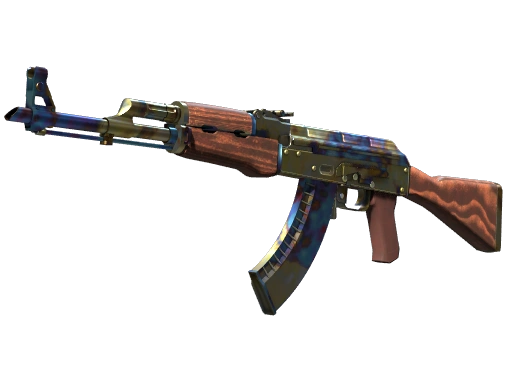
A game without stutter is also better for looking at skins. On Low Model / Texture Detail a finish looks softer up close, so if you want to see a pattern in detail, raise that one setting for a moment in an offline match and inspect the weapon. This matters most on skins where the pattern decides the look, such as the AK-47 | Case Hardened, where the amount of blue changes from one copy to the next. Our Case Hardened skins guide explains the patterns.
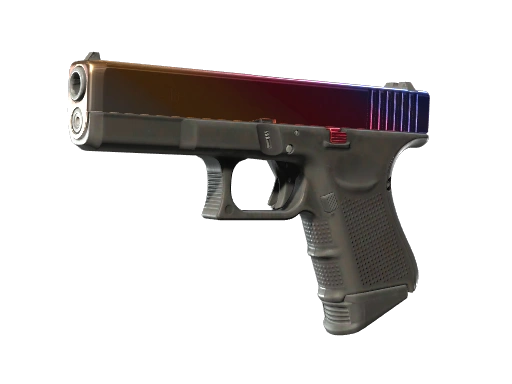
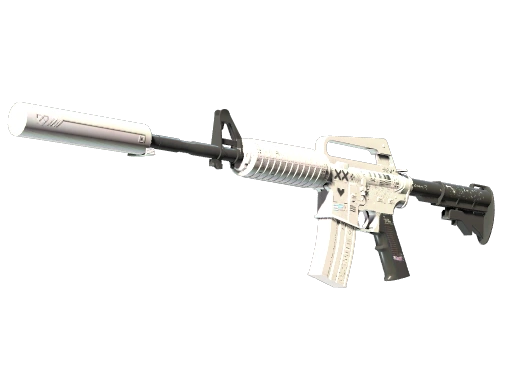
Fades and bright graphic finishes also show their colors better when the image is sharp, for example the Glock-18 | Fade and the M4A1-S | Printstream. If you want one of them, check what your skins are worth with the free CS2 Inventory Value Checker and trade them on SkinsMonkey. SkinsMonkey does not pay out cash. If you want money for your skins, use SkinCashier, our sister service.
Bottom line
Measure first, then lower anti-aliasing, shaders, particles and ambient occlusion before you touch anything else.
On most PCs the Advanced Video options and the display mode give more frames than any launch option, Windows setting or driver setting. Turn on Show Frame Time And FPS, change one option at a time, and keep the change only if the counter shows a gain in a real match.
If every option is already low and the FPS is still too low, lower the resolution or try FidelityFX Super Resolution, then update the driver and clear the shader cache. If the PC is close to the minimum requirements on Steam, settings will not fix it fully, and new hardware is the real answer.
FAQ
How do I show FPS in CS2?
Open Settings, go to the Game tab, find Telemetry and set Show Frame Time And FPS to Always. You can also enable the developer console and type cl_hud_telemetry_frametime_show 2, or cl_showfps 1 for a simple counter. cl_showfps 0 turns the simple counter off.
Why does my FPS drop in CS2?
Usually because a heavy setting, a background program or an old driver takes resources at busy moments, such as fights with grenades and molotovs. Lower Multisampling Anti-Aliasing Mode, Shader Detail, Particle Detail and Ambient Occlusion first, then update the GPU driver. If the picture is smooth but players teleport, the problem is the network, not the FPS.
Which launch options increase FPS in CS2?
Almost none. +fps_max 0 removes the FPS cap and -fullscreen starts the game in fullscreen, but most launch options from CS:GO guides do nothing for FPS in CS2. -vulkan and -high help on some PCs and hurt on others, so measure before you keep them.
Does NVIDIA Reflex increase FPS in CS2?
No. NVIDIA Reflex Low Latency lowers system latency, by up to 35% according to NVIDIA, but it does not add frames. Enabled + Boost can even lower FPS slightly. Keep Reflex on Enabled unless it causes stutter on your PC.
Is Vulkan or DirectX 11 better for CS2?
It depends on the PC. DirectX 11 is the default on Windows, and the -vulkan launch option switches the game to Vulkan. Some players get a smoother game with Vulkan, others report freezes and frame time spikes, so test both on the same map and keep the one with the more stable frame time.
What are the minimum system requirements for CS2?
According to the Steam store page: Windows 10, a CPU with 4 hardware threads (Intel Core i5 750 or higher), 8 GB of RAM, a 1 GB video card with DirectX 11 and Shader Model 5.0 support, and 85 GB of storage. A PC at this level runs the game, but not at a high, stable FPS in full matches.
Was this article helpful?One tap. It tells us what to update first.
Thanks, noted. Alex reads these before every update.
Sources
- Steam store page: Counter-Strike 2 system requirements
- Counter-Strike 2 release notes (Valve)
- The FPS Review: CS2 update of June 26, 2024 (Maximum FPS sliders, fps_max, fps_max_ui)
- NVIDIA: Counter-Strike 2 with NVIDIA Reflex
- Neowin: AMD Radeon Anti-Lag 2 launches for Counter-Strike 2
- Tom's Hardware: NVIDIA retires the Control Panel (May 26, 2026)
- Dust2.us: CS2 advanced video settings
- Dexerto: Counter-Strike 2 best settings
- GameRiv: CS2 Telemetry settings
- Hotspawn: CS2 launch options (2026)
- Hotspawn: CS2 compiling shaders fix
- Steam Community: -vulkan launch option reports