
On this page
The main ways to get free CS2 skins in 2026 are Valve’s Weekly Care Package, Trade-Up Contracts, tournament viewer drops, and promotional programs run by trading platforms like SkinsMonkey — a new-user promo code, task rewards, and giveaways. None of these deliver high-value items instantly; building a solid inventory this way takes ongoing activity rather than a single lucky pull.
Key Takeaways
- Valve’s Weekly Care Package is the most consistent free-skin source Valve runs directly — rank up through matches to unlock a small choice of items each week.
- Trade-Up Contracts let you combine ten same-rarity skins into one skin of the next tier, but the specific result is randomized, so it’s better thought of as inventory consolidation than a guaranteed upgrade.
- Third-party platforms like SkinsMonkey add extra ways to grow your inventory — task rewards and giveaways — on top of what Valve provides, and new SkinsMonkey users can enter a one-time promo code for 5% of their first trade’s value back, up to $5.
Comparing the Main Methods
| Method | Effort Required | Typical Value | Reliability |
|---|---|---|---|
| Weekly Care Package | Low, just play and rank up | Usually low (cases, common skins) | Guaranteed, as long as you score a level up during the week |
| Trade-Up Contracts | Medium, requires saving up matching skins | Variable, depends on live market prices | Random outcome within the next rarity tier |
| Tournament/viewer drops | Low, link Steam during a broadcast | Usually low, occasionally a souvenir item | Tied to specific events, not year-round |
| Platform rewards (e.g. SkinsMonkey Freebies) | Low to medium, tasks, promo code, raffle entries | Small credit amounts, occasional giveaway wins | Ongoing, new giveaways hosted regularly |
Getting Free Skins Through Valve’s Weekly Care Package
The Weekly Care Package is the foundation of free CS2 skins. Ranking up through Competitive, Premier, or Casual matches unlocks a small selection of items to pick from each week, usually a mix of weapon cases and lower-tier skins. It’s slow and mostly low-value, but it’s guaranteed, requires no purchase beyond Prime status, and is run by Valve itself rather than a third party.
Case value varies over time as new collections like Harlequin and Achroma get added to the drop pool, so it’s worth checking current Steam Market prices before assuming any specific case or skin is worth more or less than another — that changes often enough that a fixed number here would go stale fast.
Consolidating Drops Into Better Items
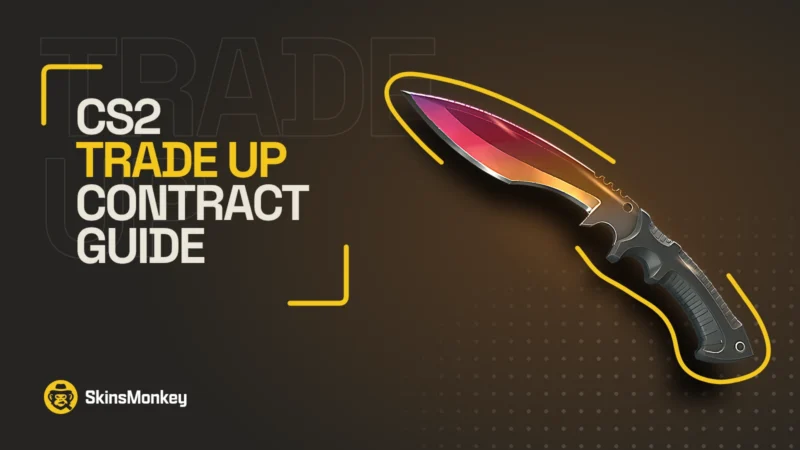
Once you’ve collected a pile of lower-value skins from drops, Trade-Up Contracts let you combine ten of the same rarity and quality into one skin from the next rarity tier. A few things worth keeping in mind:
- The specific skin you receive is chosen randomly from the higher-tier skins in your input skins’ collections — you don’t get to choose it.
- Whether the result is worth more than what you put in depends entirely on live market prices at the time, which shift constantly.
- This works best as a way to clear out clutter you’d otherwise never use, not as a reliable profit method on its own.
Tournament and Community Drops
Major CS2 tournaments occasionally offer souvenir packages or special drops to viewers who link their Steam account to the broadcast. These are seasonal and tied to specific events rather than something you can count on year-round, so treat them as a nice bonus during major tournaments rather than a steady source of free skins.
Free Skins Through Third-Party Platforms
Trading platforms often run their own reward programs on top of what Valve offers. SkinsMonkey, for example, has a dedicated Freebies section covering a few different reward types:
- Promo code — new users can enter a one-time code (MONKEY or a code from SkinsMonkey’s socials) before a trade to get 5% of the trade value back, up to $5.
- Task-based rewards — small amounts of account credit (a few cents each, about $0.17 in total) for one-time actions like verifying your email, joining the Steam group or Discord, or following the platform’s social channels. The credit stays on your account for trading.
- Giveaways and raffles — daily, weekly, and monthly draws that are free to enter with your Steam login. Prizes are skins delivered to Steam, and monthly draws can include knives and rare AWP skins, though no win is guaranteed.
These are worth using alongside your normal drops and trade-ups, but they’re a supplement, not a replacement — exact terms and reward amounts change over time, so check the current Freebies page rather than relying on a specific figure from any article.
Staying Safe While Chasing Free Skins
A couple of habits keep this reasonably low-risk regardless of which method you’re using:
- Never enter your Steam password on a third-party site. Legitimate platforms use Steam’s own login (OpenID) instead of asking for your credentials directly.
- Verify any trade offer inside Steam itself before accepting it, rather than trusting only what’s shown on a platform’s dashboard.
- Be skeptical of anything requiring a deposit first in exchange for a “free skins” reward — that’s a deposit incentive, not a free method.
FAQ
What are the best ways to get free CS2 skins? The main legitimate methods are Valve’s Weekly Care Package, Trade-Up Contracts to consolidate lower-value skins, tournament viewer drops, and platform reward programs like SkinsMonkey’s Freebies section.
Is the Weekly Care Package the most reliable way to get free skins? Yes — it’s run by Valve directly and guaranteed as long as you rank up, even though the items are usually lower-value than what trade-ups or giveaways can occasionally produce.
Are Trade-Up Contracts a good way to get free skins? They’re a good way to consolidate skins you already have into something potentially more valuable, but the outcome is randomized within the next rarity tier, so it’s not a guaranteed upgrade.
Can I get free skins without spending any money at all? Mostly — trade-ups using existing drops and task-based rewards on platforms like SkinsMonkey don’t require a deposit, only time and activity, and the Weekly Care Package needs nothing beyond Prime status.
How long does it take to build a decent inventory this way? It varies a lot by activity level, but realistically it’s a matter of weeks to months of consistent play and engagement rather than a single session — anything promising an instant high-value inventory for free is worth being skeptical of.
Was this article helpful?One tap. It tells us what to update first.
Be the first to rate this article.
Thanks, noted. Alex reads these before every update.